Thoroughbred AI, powered by Level 42 AI

The signal changes
days before the
animal does.

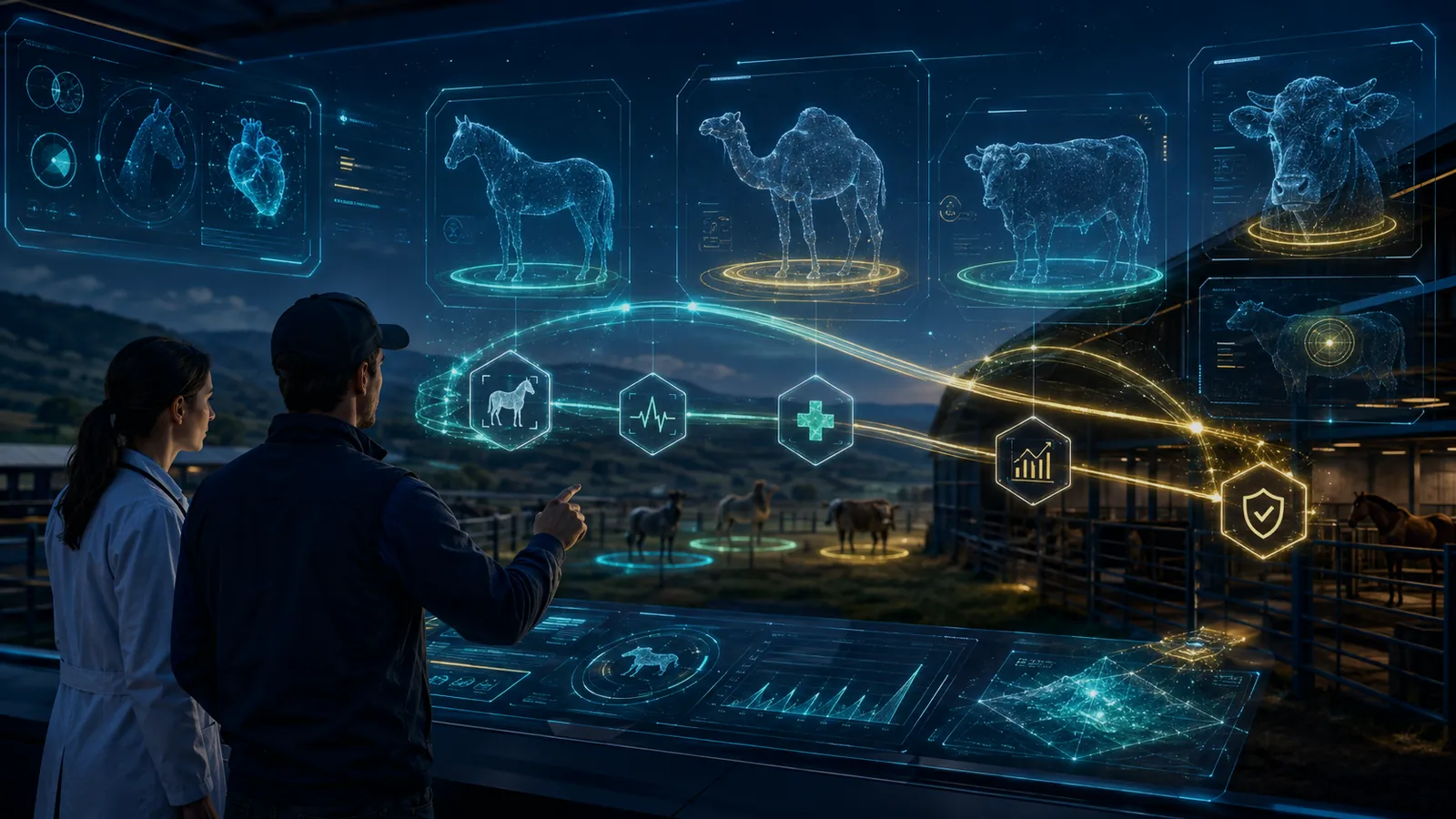
Vibrome® biosignatures interpret the inaudible, imperceptible and invisible signals a body produces every day, and turn them into screening, triage, diagnostic support and recovery monitoring for high-value equine, camel and livestock assets.

Every recording answers one question: does this animal still sound like itself? how far has it moved from its own normal? is the recovery heading back to baseline?

  • 30days to a personal baseline — what this one animal sounds like when well
  • 4workflows screen, triage, diagnose, monitor — one signal record feeds all four
  • 3+asset classes elite equine, camel operations and livestock herds on one stack

The silent symphony

Inside a champion, an invisible symphony is always playing. Gases, fluids and solids move in a pattern that fuels the power everyone can see. Health is coherence in that pattern.

Long before a cough, a bad gallop or an emergency call, the pattern shifts. Airway narrowing changes how air moves. A leaking valve changes how blood sounds. Heat strain changes rhythm and recovery. None of it is visible from the aisle, and almost none of it is captured by the systems a barn already runs.

Thoroughbred AI listens to that pattern, describes it in numbers, and tells you when this animal stops sounding like itself.

The market gap

Stable software has solved the record. Nobody has solved the signal. The difference is not a feature — it is which day you find out.

Today's stack

Remembers what happened

  1. Day 1Routine work. Nothing entered.
  2. Day 3Routine work. Nothing entered.
  3. Day 5Rider notes "not himself today".
  4. Day 6Cough at exercise. Vet called.
  5. Day 9Treatment logged. Work stopped.

Retrospective, and only as early as human attention.

Vibrome®

Reveals what is changing

Same animal, same nine days. The corridor is its own baseline; the trace leaves the corridor on day two, four days before anyone hears a cough.

Prospective, and independent of who is watching.

Thoroughbred AI is the inference layer. It does not compete with the systems you already run — it gives them risk states, triage queues, monitoring summaries and veterinary-ready evidence. API-first, hardware-agnostic, veterinarian in the loop.

Biosignature OS

A hardware-agnostic data layer that converts sound, vibration and context into animal health intelligence. Four stages, running on every recording.

  1. 1

    Ingest

    Audio, vibration, motion, temperature and stable context flow into one signal record, tagged to the animal and the moment it was taken.

  2. 2

    Encode

    Models compress raw streams into species-aware biosignature fingerprints and build a personal baseline for that individual.

  3. 3

    Compare

    Each new recording is checked against the animal itself, its cohort, and the labeled condition library.

  4. 4

    Act

    Outputs land where work happens: triage priority, diagnostic support for the vet, and a monitoring plan with a defined endpoint.

The moat is not the device

Probes, blankets and stethoscopes will keep improving, and anyone can buy them. What compounds is the library: novel vibrome data paired with outcomes and veterinary labels, growing every day the platform runs.

  • Personal baseline — what this animal sounds like when well
  • Cohort baseline — how the string, stable or herd behaves
  • Condition library — labeled patterns tied to veterinary truth
  • Outcome feedback — recovery curves, recurrence, return to work

Every normal day is a control. Every anomaly teaches the model. Record, label, learn, predict, monitor.

From sickcare to wellcare

Stop waiting for visible decline. Start managing deviation while action is still cheap and the animal is still working.

  1. Baseline

    Thirty days of ordinary recordings establish what well sounds like for this individual, not for the species average.

  2. Deviation

    The model flags drift from the animal's own normal, with the size and direction of the change, not a raw alarm.

  3. Triage

    Deviations are ranked, so the team knows which animal to look at first this morning and why.

  4. Monitoring

    After the vet acts, the same measurement tracks response, relapse risk and the return toward baseline.

Reactive sickcare

Clinical signs, an emergency call and an expensive intervention arrive after the signal has already been changing for days. The bill and the lost days are both maximal.

Proactive wellcare

Continuous biosignature monitoring flags the deviation, prioritizes the vet's attention and documents the return to baseline. The intervention is smaller and earlier.

One signal stack, many asset classes

The physics of a moving body does not change at the species boundary. The baselines, the cohorts and the condition libraries do.

Elite equine

Racing, sport and breeding programs where a respiratory or cardiac change costs a campaign. Earlier insight into airway, cardiac and recovery status, animal by animal.

Racing yards · sport horses · stud farms

Camel assets

Racing, dairy and desert operations where heat strain, respiratory load and recovery drive both welfare and value, often across large distributed strings.

Race strings · dairy · endurance

Livestock herds

Dairy, beef and small ruminants where screening has to scale to hundreds of animals and triage matters more than individual diagnosis.

Dairy · beef · small ruminants

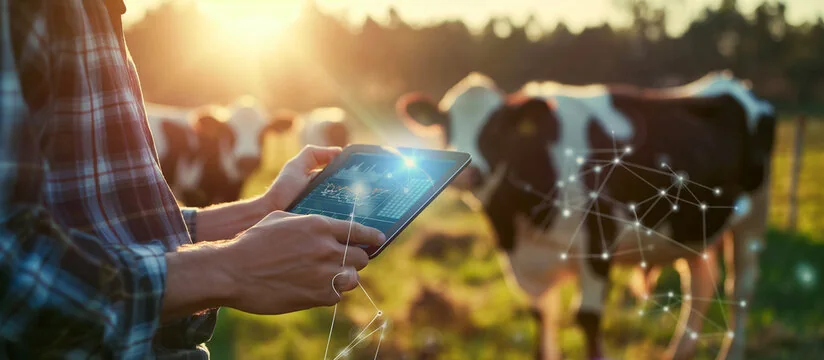
Herd manager reviewing biosignature data on a tablet in front of dairy cattle

Condition intelligence modules

We start where three things line up: the signal changes measurably, the asset is valuable, and acting early changes the outcome. Select a module to see where it sits and what the validation pathway looks like.

Build first Prove the signal Document and defend Watch and learn
Commercial urgency Biosignature separability
  • Respiratory & screening
  • Cardiac & rhythm

Placement reflects commercial priority and expected signal separability at pilot stage. It is a roadmap, not a statement of validated diagnostic performance. Prevalence figures come from the published veterinary literature and describe the problem, not this platform.

What we claim, and what we do not

This is a screening and monitoring layer built with veterinarians, not an autonomous diagnosis engine. Being precise about that is how the category earns trust.

Claims status for Thoroughbred AI outputs
OutputWhat it isStatus
Deviation from baseline A measured change in this animal's own biosignature over time. Core function
Triage priority A ranking of which animals warrant attention first, with the reason attached. Core function
Signal family suggestion Likely categories of change, surfaced for a veterinarian to confirm or reject. Vet-confirmed
Condition-level detection Module-by-module sensitivity and specificity against a veterinary reference standard. In validation
Standalone diagnosis A clinical conclusion without a veterinarian in the loop. Not claimed
Regulatory clearance Approval as a medical device in any jurisdiction. Not claimed

The category already works elsewhere

Acoustic AI is not a hypothesis in animal health. In commercial swine production, continuous cough-sound monitoring has been reported to surface respiratory disease up to five days ahead of conventional observation, and is deployed at farm scale today.

Thoroughbred AI applies that principle where the per-animal value is orders of magnitude higher, and where the accepted clinical instrument — the stethoscope — is already an acoustic one, just limited to what a human ear can hear in a two-minute exam.

Our pathway per module: retrospective signal library, prospective paired study against the veterinary reference standard, then published performance. Modules move from roadmap to product only when that evidence exists.

Capture instruments

The platform is hardware-agnostic by design. These are the instruments built inside the Level 42 AI® group, and any of them can be swapped for equipment you already own.

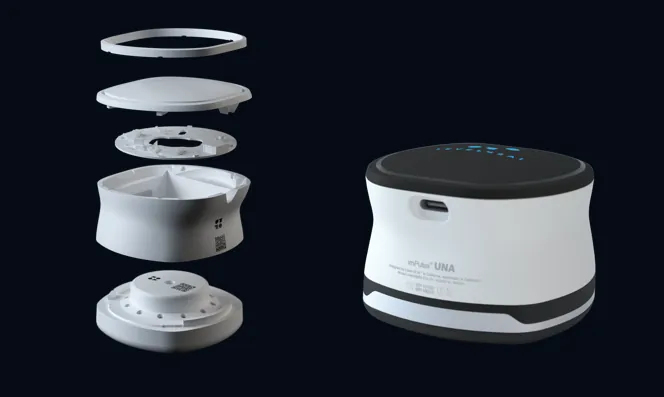
imPulse UNA point-of-need embedded-AI stethoscope, exploded and assembled views

imPulse® UNA

Point-of-need infrasonic and ultrasonic capture with embedded AI. A stethoscope that records a full-spectrum signal rather than what fits the human hearing range.

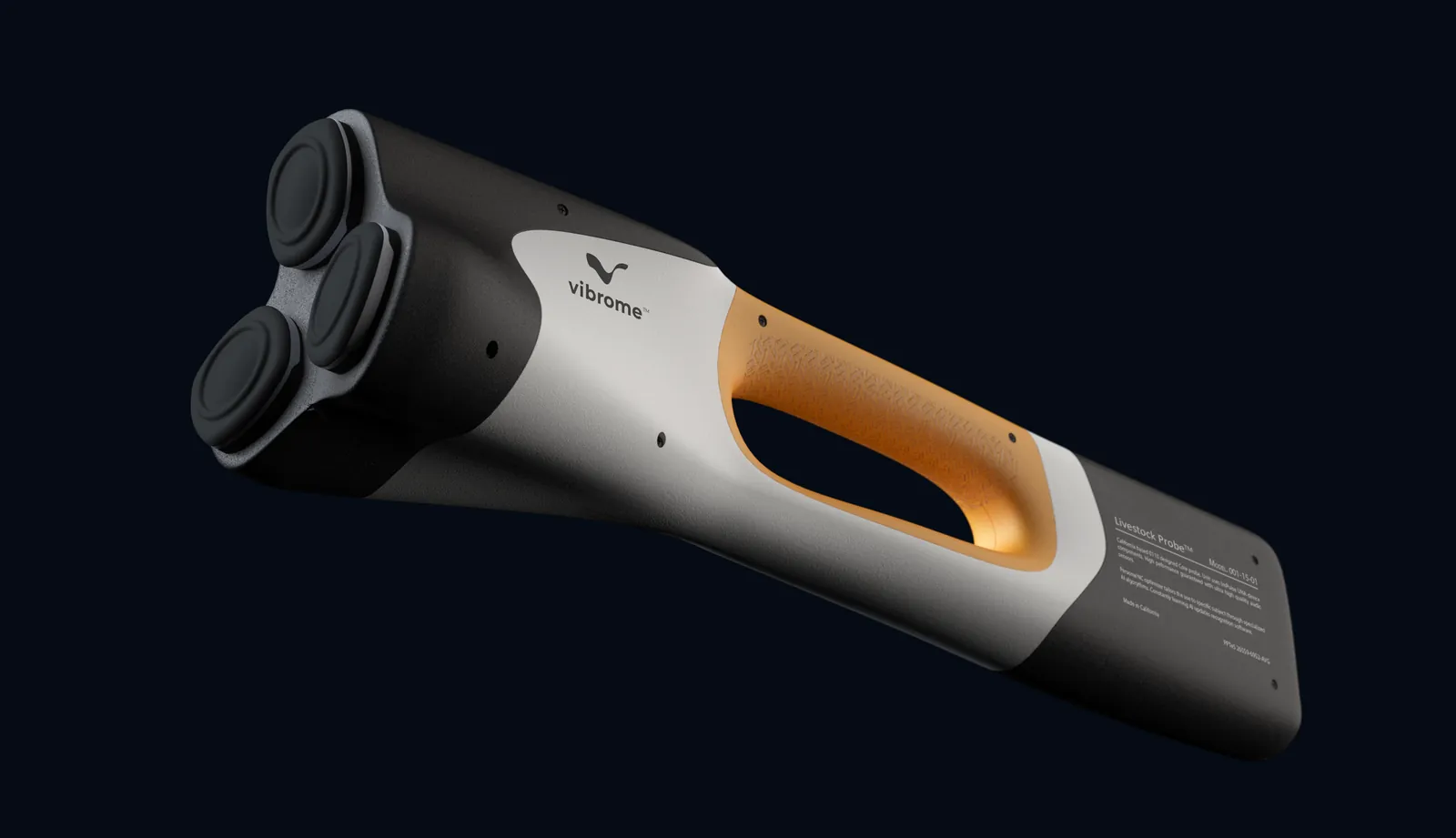
Vibrome EquineProbe handheld capture device

Vibrome® EquineProbe

A handheld probe shaped for large-animal work: multi-point capture over thorax and abdomen, consistent placement, one recording session per animal.

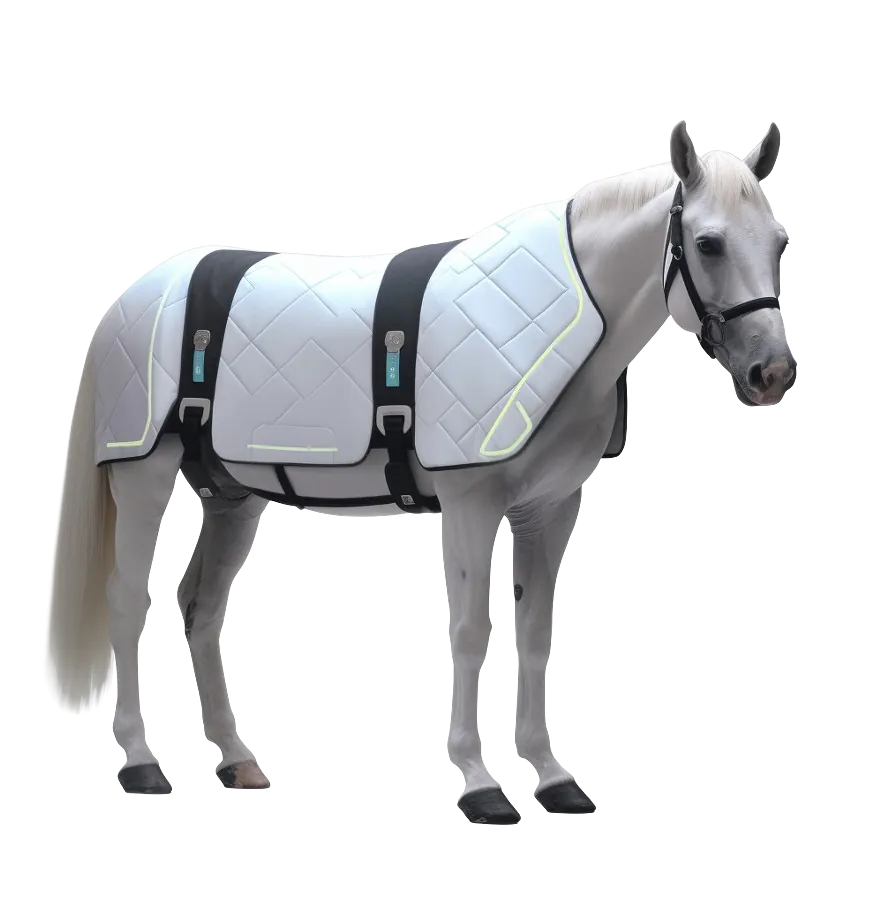
Horse wearing the Warden+ Thoroughbred smart blanket with embedded sensors

Warden+ Thoroughbred

An instrumented blanket for continuous capture in the box and on the walker, for animals where a daily snapshot is not enough.

The intelligence layer you are missing

We do not replace the stable platform, the vet practice system or the racing authority's records. We enrich them, through one API.

  • Risk scoreWhich animal needs attention today, and how far it has moved from its own normal.
  • Triage queueAn ordered list with the reason for each position, ready for the morning round.
  • Monitoring summaryIs recovery moving toward baseline, stalling, or reversing?
  • Compliance exportThe evidence trail that should follow the animal into a sale, a claim or a regulatory file.
Operations team reviewing an animal health dashboard with biosignature panels

How a pilot runs

Ninety days from first recording to an operational dashboard, with a defined deliverable at each stage. Data and inference as a service — no capital equipment program required to start.

  1. Days 0–30

    Baseline capture

    Build the animal, string and herd normal map. Fix capture protocol and handler routine. Deliverable: a baseline report per animal.

  2. Days 30–60

    Risk model

    Introduce triage thresholds, the veterinary review loop and label capture. Deliverable: a working triage queue with vet feedback recorded.

  3. Days 60–90

    Operational dashboard

    Monitoring reports, recovery curves and integration feeds into your systems. Deliverable: a decision on scope for the next season.

Questions we get first

What exactly is a Vibrome® biosignature?

A compressed numerical description of the sound and vibration a body produces, encoded so that two recordings of the same animal can be compared meaningfully over time. It is not an audio file, and it is not a diagnosis. It is the measurement that makes change detectable.

Does this replace my veterinarian?

No, and the design assumes the opposite. The platform decides where veterinary attention goes and documents what happened after it arrives. Every condition-level output is presented for veterinary confirmation, and those confirmations are what improve the model.

Do I have to buy your hardware?

No. The platform is hardware-agnostic: it ingests from our instruments or from capture equipment you already run, provided the recording meets the signal specification. Most pilots start with a single handheld device per yard.

How long before it tells me anything useful?

Deviation detection needs a personal baseline, which typically takes about thirty days of routine recording. Cohort-level screening produces useful ranking sooner, because the string provides its own comparison group from day one.

Which conditions are covered today?

Deviation detection and triage work across the animal as a whole. Condition-specific modules — starting with equine respiratory and cardiac work — sit at different points on the validation pathway, and we state that status openly rather than describing every module as finished.

Who owns the recordings and the labels?

You own your animals' data. Pilot agreements set out what may be used in aggregate to improve models, on what terms, and how it is de-identified. Owners of high-value bloodstock get the strictest handling by default.

One instrument, several staves

Thoroughbred AI is the quadruped program inside Level 42 AI®. The same biosignature science runs across the group.

Turn animal signals into wellcare decisions.

We are opening pilots with high-value barns, racing programs, camel operations and livestock enterprises where earlier insight changes outcomes and preserves asset value. Tell us about your operation and we will come back with a scoped ninety-day plan.